Storm Damage Roofing
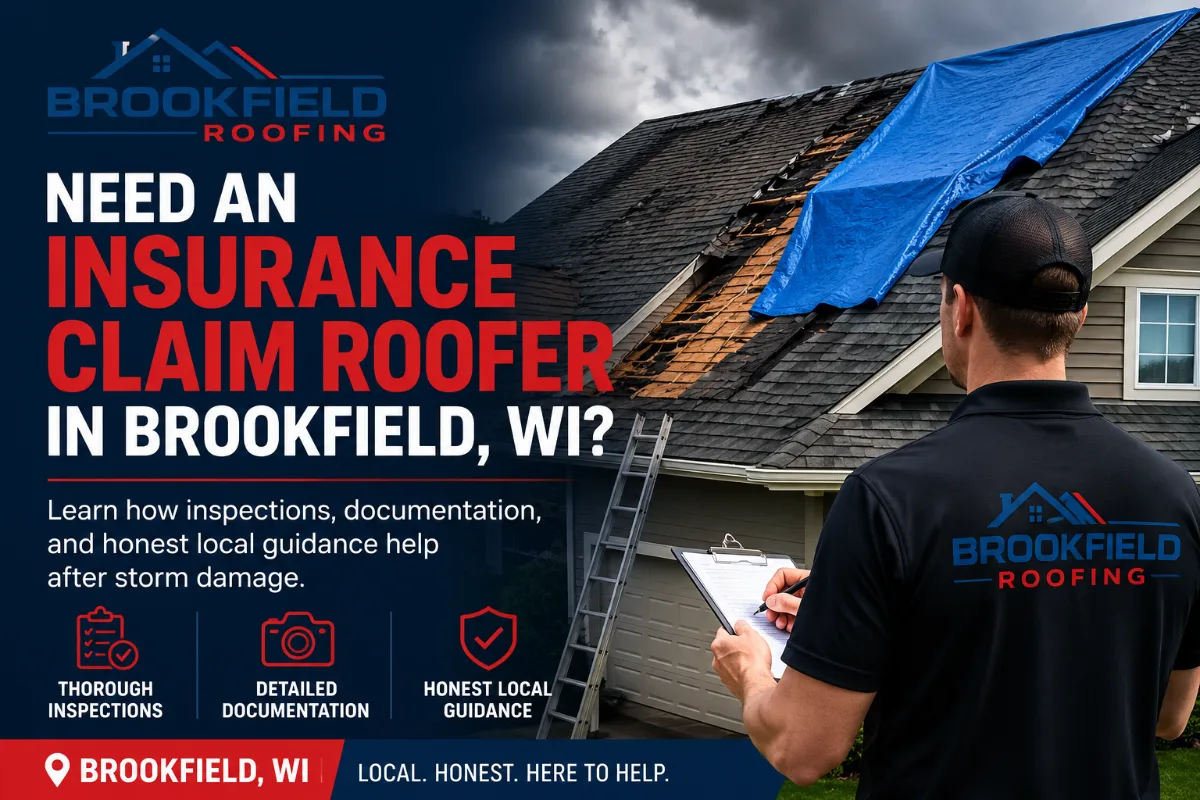
Need an Insurance Claim Roofer in Brookfield WI?
A windstorm can pass through Brookfield in twenty minutes and leave you dealing with months of questions, adjuster calls, roof inspections, and paperwork. Missing shingles, lifted tabs, granule loss, water stains, and damaged flashing can all raise the same concern: is this storm damage, normal wear, or something else?
That is where an insurance claim roofer in Brookfield WI can make a real difference. Not by promising claim approval or speaking for your insurance company, but by giving you clear documentation, an honest roof assessment, and a process that helps you understand what is actually happening on your roof.
In Wisconsin, the cause of roof damage matters. Hail, high winds, ice dams, snow load, aging shingles, poor ventilation, and freeze-thaw cycles can all affect a roof differently. Insurance carriers usually look closely at the cause, age, and condition of the roof before making any coverage decision.
What an Insurance Claim Roofer Actually Does
A good roofer involved in an insurance-related roofing situation is not there to replace your adjuster or act like a lawyer. The role is more practical. The roofer inspects the roof system, documents visible conditions, explains what appears storm-related versus age-related, and gives the homeowner written information that can be used when speaking with the insurance carrier.
A thorough inspection should include shingles or roof membrane, flashing, vents, valleys, pipe boots, chimneys, drainage paths, gutters, and any visible signs of storm impact. It should also include interior or attic observations if water has entered the home.
That distinction matters because not every roofing problem belongs in an insurance claim. A leak around a cracked pipe boot on a very old roof may be a maintenance issue. A section of shingles creased and torn after a documented wind event may point toward storm damage. Hail marks on soft metal components can help support a timeline, but they do not automatically mean the entire roof needs replacement.
Honest assessment protects homeowners from wasting time on a weak claim and helps them move faster when the damage is real.
Why Local Experience Matters in Brookfield and Waukesha County
Roofing problems in southeastern Wisconsin are rarely simple. A Brookfield home can take heavy wind exposure on one roof slope, hold snow longer on a shaded section, and develop ice dam issues where attic ventilation and insulation are out of balance.
Many homes in Brookfield, Elm Grove, New Berlin, Waukesha, and Pewaukee were built in periods where architectural shingles, complex rooflines, skylights, dormers, and multiple valleys became common. Those details matter during a professional roof inspection because water often enters through transition points rather than the open field of the roof.
Local contractors also understand the practical side of the job. Permit expectations, municipal requirements, neighborhood appearance standards, and clean project execution all matter. If your home is in an HOA-managed neighborhood, shingle color, material selection, and exterior appearance may affect how quickly the project moves.
This is one reason many homeowners prefer working with a local roofing contractor instead of a storm-chasing operation that appears after bad weather and disappears later. Local accountability matters when you have follow-up questions, warranty concerns, or need the same company to stand behind the work after the claim is closed.
Insurance Claim Roofer Brookfield WI: What the Process Usually Looks Like

The process usually starts with a roof inspection after a storm event or after the homeowner notices warning signs like shingle pieces in the yard, ceiling stains, loose flashing, or water around vents and chimneys.
The inspection should be detailed and documented. Photos, notes, and a written summary help you understand whether the damage appears consistent with a claim or whether a smaller roof repair may be the more reasonable path.
If the damage appears claim-worthy, the next step is typically contacting your insurance carrier. Some homeowners file first and call a roofer second. Others schedule an inspection before calling so they can describe the visible issue more accurately.
After the claim is opened, the carrier may send an adjuster to inspect the property. A contractor can often be present during that inspection to answer roof-specific questions, point out documented damage, and clarify scope items such as starter rows, ridge materials, flashing replacement, ventilation components, decking concerns, and code-related details that may affect the job.
That does not guarantee any outcome. It simply helps keep the discussion grounded in what is actually on the roof.
Common Signs of Storm-Related Roof Damage
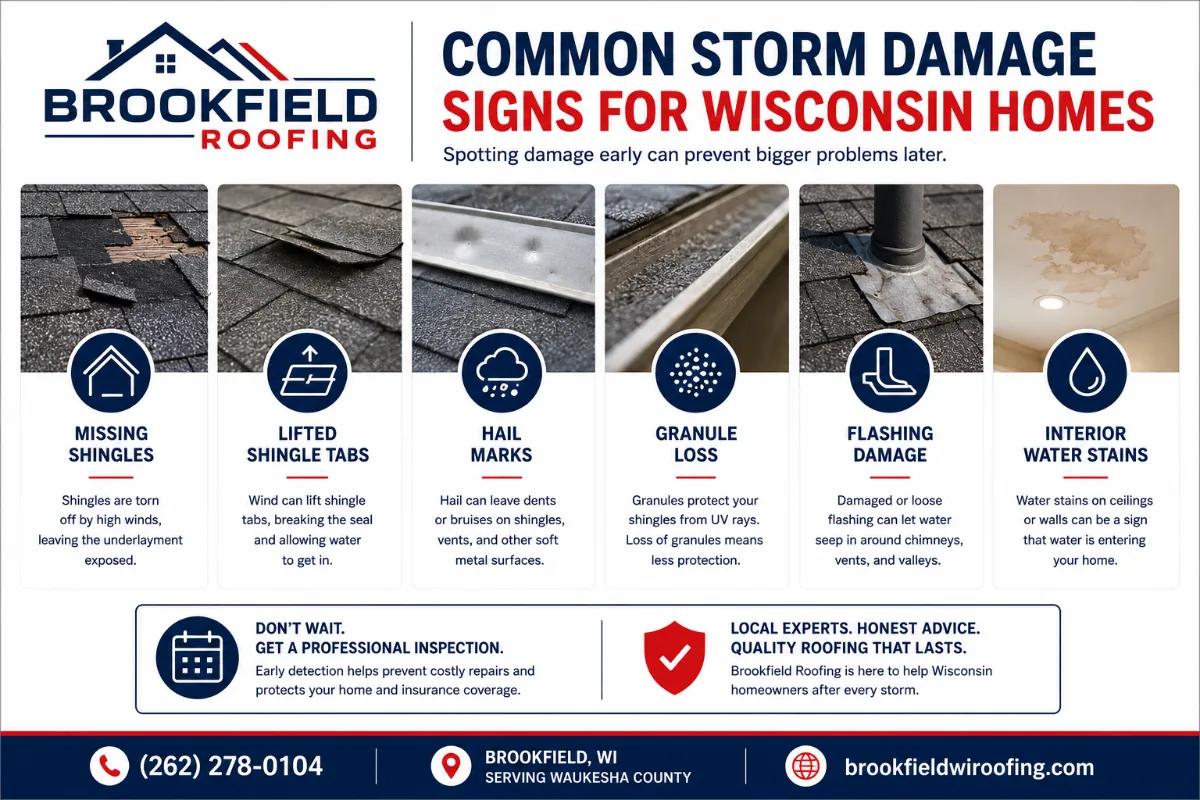
Storm damage can be obvious, subtle, or somewhere in between. Missing shingles are easy to see from the ground, but many other issues require a closer look.
Common signs that may justify a storm damage inspection include:
- Missing shingles after strong wind
- Lifted, creased, or torn shingle tabs
- Granule loss in gutters or near downspouts
- Hail marks on gutters, vents, or soft metal components
- Loose or displaced flashing
- Water stains on ceilings or walls
- Debris impact from branches or fallen limbs
- Leaks around chimneys, valleys, vents, or skylights
If water is actively entering the home, homeowners may need emergency roof repair or temporary protection before the full inspection and claim process is complete.
The Most Common Mistakes Homeowners Make After Storm Damage
Waiting Too Long
One common mistake is waiting too long after a storm. Small openings do not always produce immediate leaks, especially during warm weather. But once water gets under shingles or around flashing, hidden moisture can spread into insulation, decking, and interior finishes.
By winter, that same weak area may become worse because snow and ice add weight and moisture pressure to the roof system.
Assuming Every Roof Issue Belongs in a Claim
Another mistake is assuming every visible roof issue should go through insurance. Insurance carriers generally treat sudden storm damage differently than normal aging, wear, or maintenance-related problems.
If a roof has widespread age-related deterioration, brittle shingles, chronic ventilation issues, or previous patchwork repairs, those factors can affect the claim review. A trustworthy roofer should tell you when damage looks more like age than storm impact.
Choosing Pressure Over Proof
The third mistake is choosing a contractor based on urgency or pressure instead of proof. If someone pushes you to sign immediately, avoids questions about scope, or speaks in absolutes about insurance approval, that is a red flag.
A better process is straightforward: inspect carefully, document thoroughly, explain clearly, and provide a written estimate without pressure.
What Good Roofing Documentation Looks Like
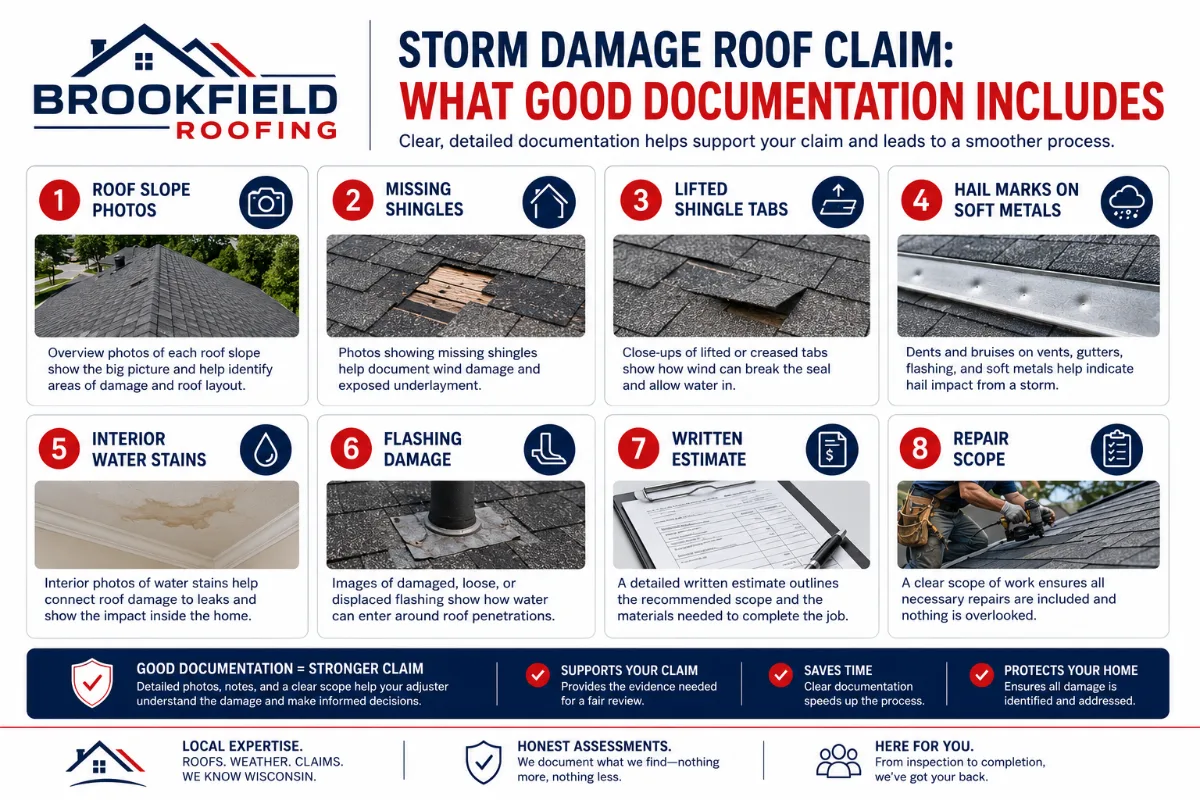
Strong claim support starts with details. Clear photos of shingle creasing, missing tabs, hail impacts to soft metals, displaced flashing, punctures, interior staining, moisture entry points, and slope-specific damage all matter.
Notes on roof age, slope orientation, storm date if known, and prior repairs can also help create a more complete picture of what happened.
Written estimates matter too. Homeowners should be able to see what is included, not just a bottom-line price. A clear estimate may include tear-off, underlayment, ice and water protection where required, flashing work, ventilation components, cleanup, disposal, and any decking replacement terms.
This protects the homeowner whether the project becomes an insurance job, a retail repair, or a larger roof replacement paid through a mix of claim funds and out-of-pocket costs.
When Repair Makes More Sense Than Replacement
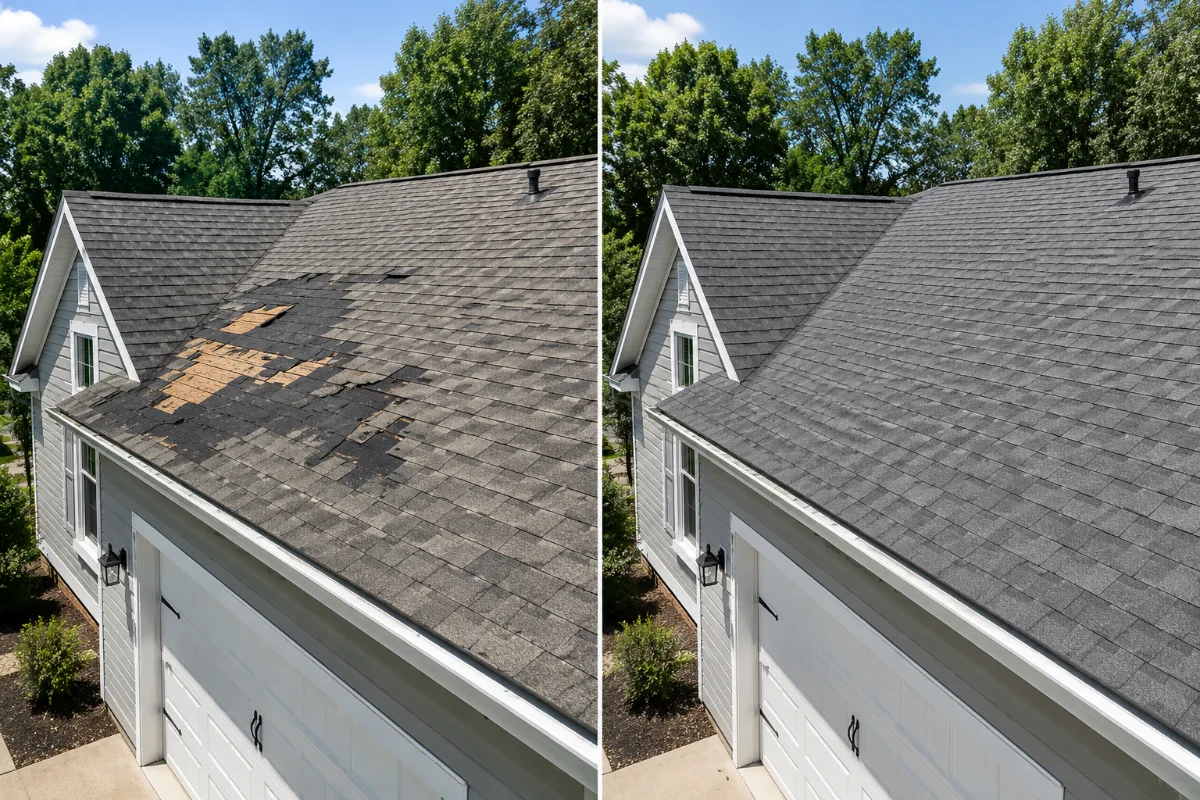
Not every insurance-related roofing conversation ends with a full reroof. That is not a bad thing. If damage is isolated to one area and matching materials are available, a repair may restore performance without unnecessary cost.
This is especially true on newer roofs with limited wind damage or some commercial low-slope systems where membrane repair is practical.
The trade-off is longevity and appearance. A spot repair on an older roof may solve the immediate leak but not the broader aging problem. On residential shingles, color blending can also be an issue. On flat roofs such as TPO or EPDM, repair success depends heavily on membrane condition, seam quality, drainage, and whether moisture has spread below the surface.
The right answer depends on what the inspection shows.
What Homeowners Should Expect From Their Roofer
Homeowners should expect direct communication, a licensed and insured contractor, a written estimate, and a crew that respects the property. They should also expect realistic guidance.
That means no inflated claims about damage, no vague pricing, no guaranteed insurance outcomes, and no disappearing after the adjuster meeting.
A quality contractor should also think beyond the surface materials. Wisconsin roofs need proper ventilation, flashing details that hold up through freeze-thaw cycles, and installation methods that match local weather demands.
If storm damage leads to replacement, the goal is not simply to put back what was there before. The goal is to build a roof system that performs better through wind, snow, ice, and heavy seasonal swings.
Helpful Insurance Resource for Homeowners
Homeowners looking for general information about property insurance and claims can review educational resources from the Insurance Information Institute. Your own insurance carrier is still the final source for coverage decisions, policy terms, deductibles, and claim handling.
Final Thoughts
If your roof may have storm damage, the best next step is not to guess from the ground or wait for a ceiling stain to spread. Get a professional inspection, ask clear questions, and make decisions based on documented facts rather than urgency alone.
Brookfield WI Roofing Contractors approaches claim-related roofing work the same way it approaches every project: inspect carefully, explain the findings plainly, put everything in writing, and complete the work cleanly if you decide to move forward.
If you noticed missing shingles, hail marks, water stains, or roof damage after a storm, schedule a roofing inspection and estimate so you can understand the condition of your roof before the problem becomes more expensive.
More Images