When water is coming through the ceiling at 9 p.m. after a windstorm, nobody is thinking about roofing terminology. You want the leak stopped, the house protected, and a clear answer about what happens next. That is exactly where emergency roof tarping Brookfield WI becomes valuable - not as a permanent fix, but as the fastest safe step to limit damage until full repairs can be completed.
A good tarp job does more than cover a hole. It protects attic insulation, drywall, flooring, framing, and personal belongings from ongoing water intrusion. In Wisconsin, that matters even more because one storm event can quickly turn into a bigger problem when wet materials sit through humidity, overnight temperature drops, or the next round of rain.
What emergency roof tarping actually does
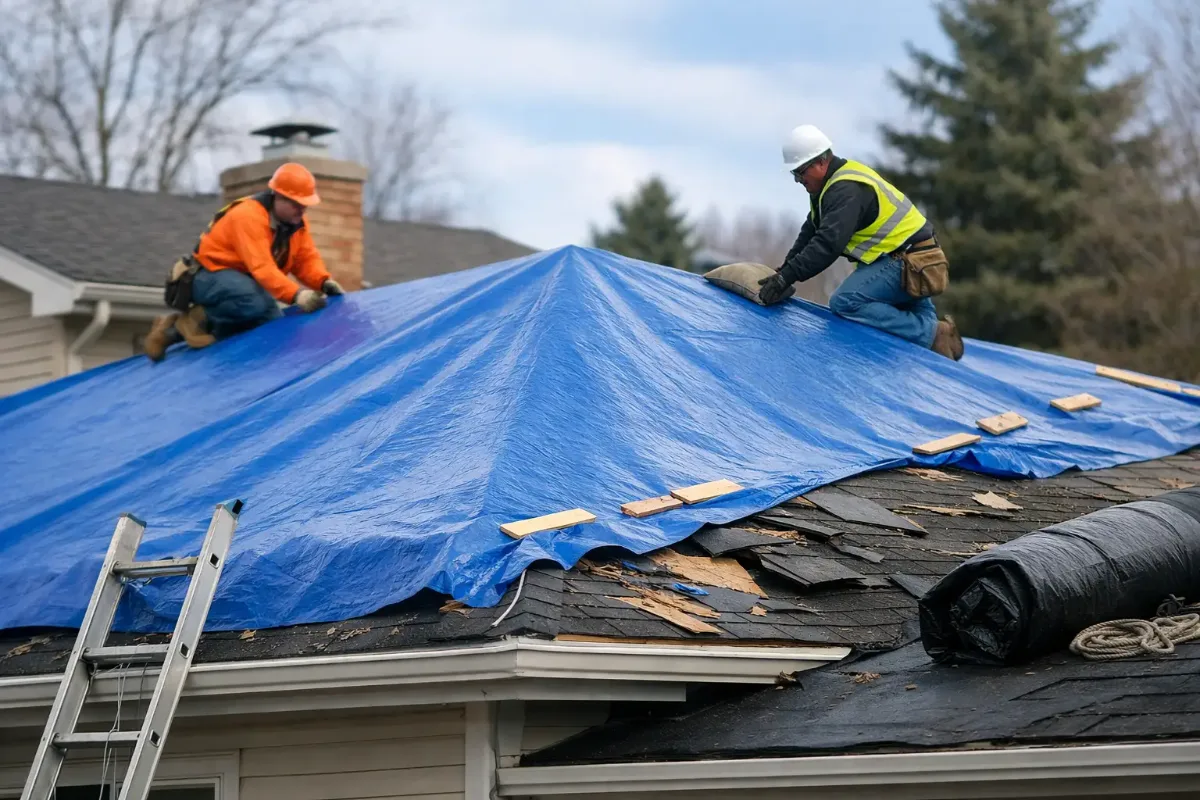
Emergency roof tarping is a temporary protective measure installed over a damaged section of roof to reduce or stop water entry. It is commonly used after missing shingles, fallen branches, hail impact, flashing damage, or exposed decking from severe wind. The tarp creates a barrier while the roof is inspected, documented, and scheduled for repair.
The key word is temporary. A tarp is there to stabilize the situation. It buys time for the right repair plan, whether that means replacing a section of shingles, addressing underlayment damage, repairing decking, or fixing a more complex issue around chimneys, valleys, or roof penetrations.
That distinction matters because some leaks look simple from inside the house and turn out to involve a larger failure path on the roof. Water can travel along decking, rafters, and insulation before it ever shows up on a ceiling stain. A quick cover helps, but the real value comes from pairing that emergency response with an honest inspection and written repair recommendations.
When Brookfield homeowners should call for emergency roof tarping
Not every roof issue needs same-day tarping, but some situations do. If water is actively entering the home, if shingles or flashing have blown off, if a tree limb has struck the roof, or if storm damage has exposed raw roof decking, it is time to act quickly. The same goes for flat or low-slope commercial sections that begin ponding or leaking after membrane damage.
Brookfield homes built in the 1990s and 2000s often have roofing systems that are still serviceable overall, but more vulnerable at transition points as they age. Pipe boots crack. Ridge caps loosen. Older sealants fail around vents and flashing. Add strong wind, hail, freeze-thaw movement, or heavy snow loads, and an issue that seemed minor last season can turn into an active interior leak.
The need can also be less obvious. Sometimes homeowners call after noticing damp attic insulation, bubbling paint, or a brown ring on an upstairs ceiling after a storm. In those cases, emergency tarping may still be the right call if the roof surface has been compromised and more rain is in the forecast.
Emergency roof tarping in Brookfield WI after storms
Southeast Wisconsin weather does not give roofs much of a break. Spring hail, summer wind, fall debris, and winter ice all create different kinds of roof stress. That is why emergency roof tarping in Brookfield WI often follows a very specific pattern: fast-changing weather, visible exterior damage, then interior signs that show up hours later.
Wind damage is one of the most common triggers. A few missing shingles may not sound dramatic, but if underlayment is exposed on a steep slope, water can get under surrounding materials quickly. Hail can be less obvious to the untrained eye, especially when granule loss and bruising weaken shingles without tearing them apart right away. Snow and ice add another layer. Ice dams near eaves can force water backward under shingles, and freeze-thaw cycles can widen small openings around flashing.
For commercial buildings, the pattern is different but just as urgent. TPO and EPDM systems can develop punctures, seam issues, or drainage-related leaks that need immediate containment. A properly secured emergency cover helps protect inventory, equipment, ceilings, and tenant spaces while the roof system is evaluated.
What a professional tarp response should include
A reliable emergency response is not just somebody throwing plastic on a roof. The first priority is safety. Wet, storm-damaged roofing is dangerous, especially on steep residential slopes or in areas with hidden decking damage. Homeowners should stay off the roof and focus on protecting the interior if it can be done safely.
A professional tarp job starts with assessing the damaged area, identifying where water is likely entering, and determining how far protection needs to extend beyond the visible opening. That last point matters because a tarp that only covers the obvious hole may fail if water is still getting underneath from a higher point on the slope.
The installation itself should be tight, secure, and designed to hold through changing conditions, not just the next few hours. The crew should also document visible damage, explain what is known versus what still needs full inspection, and outline the next steps in writing. For many homeowners, that documentation is helpful when talking with their insurance carrier, even though the final scope of covered repairs depends on the policy and adjuster findings.
You should also expect straightforward communication. If the roof needs a small repair, you should hear that. If the damage suggests broader problems with shingles, ventilation, flashing, or decking, that should be explained clearly too. Honest assessment matters most when stress is already high.
What tarping cannot fix
A tarp can stop immediate water entry, but it does not correct the underlying roofing failure. It will not restore lifted shingles, replace soaked underlayment, repair rotted decking, solve improper ventilation, or address flashing details that were installed poorly in the first place.
That is why some emergency situations turn into targeted repairs, while others reveal the need for a larger project. It depends on the age of the roof, the extent of the storm damage, and whether the system was already nearing the end of its service life. A fifteen-year-old roof with one isolated impact area is different from an older roof with repeated leak history, brittle shingles, and soft decking around multiple penetrations.
There is also a timing issue. Temporary coverings should not be ignored once the immediate crisis has passed. The longer a tarp stays in place, the greater the chance that weather, UV exposure, or movement will weaken it. Emergency protection should lead to a real repair plan, not become a substitute for one.
How local experience helps after a roof emergency
Roof emergencies are stressful partly because it is hard to know whether you are getting good information. Local roofing experience makes a difference here. A contractor who works regularly in Brookfield and nearby Waukesha County communities understands common home styles, attic ventilation patterns, storm trends, and the practical realities of Wisconsin roofing materials.
That local knowledge shows up in small but important ways. It affects how damage is traced on steeper subdivision roofs, how ice-related leak paths are interpreted, and how quickly a crew can separate cosmetic issues from structural concerns. It also matters when discussing repair timing, municipal code expectations, and whether HOA requirements could affect visible material choices in certain neighborhoods.
Just as important, a local company has accountability. You are not dealing with a storm-chasing crew that disappears after the weather clears. You want a licensed and insured contractor who provides written estimates, documents conditions carefully, keeps the site clean, and follows the project through final walkthrough.
What homeowners should do while waiting for help
If the roof is actively leaking, focus on interior protection only if it is safe to do so. Move furniture, electronics, rugs, or valuables away from the affected area. Place buckets or containers under drips and use towels to limit slipping hazards. If water is bulging a ceiling, that can indicate trapped moisture, and the situation should be handled carefully.
Take photos of visible interior damage and, from the ground only, any obvious exterior damage you can safely see. That record can help with repair planning and insurance documentation. Then make the call for professional assessment and emergency protection.
If you are in Brookfield or nearby communities such as Elm Grove, New Berlin, Waukesha, or Pewaukee, a fast local response can often make the difference between a manageable repair and a much more expensive interior restoration job.
Brookfield WI Roofing Contractors approaches these calls the way homeowners usually need them handled - quickly, clearly, and without pressure. The immediate goal is to protect the house. The next goal is to give you an honest picture of what the roof actually needs, with written recommendations you can make decisions from.
When a storm opens up your roof, the best next step is not panic and it is not guesswork. It is getting the leak contained safely so your home has a real chance to stay dry while the right repair is put in motion.