
Roofing Tips
How Much Does a Roof Repair Cost? A Homeowner's Guide
Roof repair costs can vary significantly depending on the type of damage, the age of the roof, the materials involved, and how quickly the problem is addressed. In Brookfield, Wisconsin and nearby Waukesha County communities, roof repairs are often connected to wind, hail, snow, ice dams, aging shingles, flashing problems, and repeated freeze-thaw cycles.
For most homeowners, the question is not only “How much will this cost?” It is also “What exactly needs to be repaired, and can I trust the estimate?” A small flashing issue may be simple to correct. A recurring leak, widespread storm damage, or roof system with failing shingles may require a larger conversation about whether repair or replacement makes more sense.
Why Roof Repair Pricing Can Vary So Much
Roof repair pricing is rarely one-size-fits-all. Two homes can have similar water stains inside, but completely different causes on the roof. One homeowner may have a loose pipe boot. Another may have failed flashing, damaged underlayment, wet decking, or storm-related shingle damage across a larger area.
That is why a good estimate should begin with a careful professional roof inspection. The inspection should look beyond the obvious problem and evaluate shingles, flashing, valleys, vents, chimneys, gutters, ventilation, and signs of hidden moisture. In Wisconsin, water can travel under shingles, along rafters, or behind insulation before it appears as a ceiling stain.
A trustworthy roofing contractor should explain what was found, what needs to be corrected, and whether the repair is expected to solve the issue long term. If the estimate does not explain the cause of the problem, it is difficult to know whether the price is fair.
Common Factors That Affect Roof Repair Cost
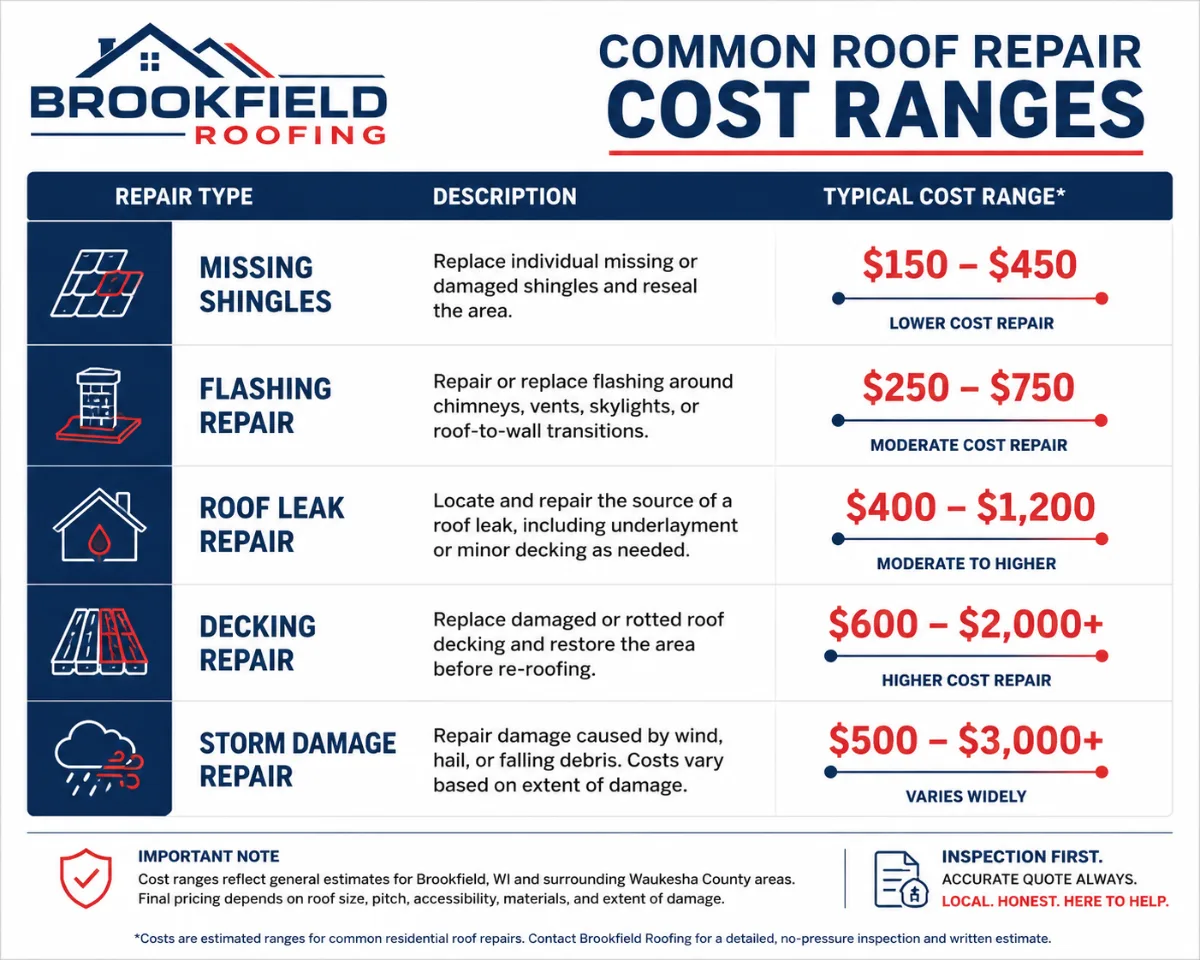
1. The Type of Roof Damage
Minor shingle damage usually costs less to repair than a leak involving flashing, decking, insulation, or interior water damage. Replacing a few missing shingles after a wind event is very different from tracing a leak around a chimney or repairing damage caused by an ice dam.
Some repairs are visible from the outside. Others require a closer inspection because the real issue is hidden beneath the surface. For example, a small leak near a bathroom vent may actually involve cracked pipe boot flashing, deteriorated underlayment, or moisture that has already reached the roof deck.
2. The Location of the Problem
Repairs near roof edges, valleys, chimneys, skylights, dormers, and wall transitions are often more detailed than repairs in the middle of an open roof slope. These areas move more water and usually require better flashing work.
In Brookfield homes, chimney flashing and roof-to-wall flashing are common leak points. Wisconsin weather puts constant pressure on these areas because metal, sealants, shingles, and wood expand and contract through temperature swings.
3. Roof Age and Material Condition
A newer roof with one isolated issue is usually easier to repair than an older roof with brittle shingles, granule loss, curling edges, or repeated leak history. As shingles age, they become harder to work with without causing additional damage.
If a roof is near the end of its service life, a contractor may still be able to complete a repair, but the homeowner should understand the limits of that repair. A patch can address a specific issue, but it cannot restore the condition of an aging roof system.
4. Labor, Access, and Safety
Steep roofs, high rooflines, limited access, landscaping protection, and difficult repair locations can all affect labor. A repair on a low, walkable ranch-style roof is usually simpler than work on a steep two-story home with multiple rooflines.
Safety also matters. A professional roofing crew needs the right equipment, fall protection, and setup time. A low price that ignores safe working conditions is not a good deal for the homeowner or the crew.
5. Hidden Moisture or Decking Damage
If water has reached the roof decking, insulation, or attic framing, the repair becomes more involved. Damaged decking may need replacement before new roofing materials can be installed correctly.
This is one reason delayed repairs often become more expensive. A leak that could have been addressed early may spread into drywall, insulation, fascia, soffit, or structural materials if ignored through multiple storms.
Typical Roof Repairs Homeowners Ask About
Missing or Damaged Shingles
Wind can lift, crease, or remove shingles, especially on older roofs or areas exposed to open wind. If the damage is limited, a targeted roof repair may be enough to restore protection.
The contractor should still check nearby shingles. Wind damage often affects more than one obvious spot, and lifted shingles may not reseal properly.
Roof Leak Repairs
Roof leaks can come from shingles, flashing, valleys, vents, chimneys, skylights, or ice dam backup. The visible water stain inside the home is only the symptom. The repair should address the actual water entry point.
If water is actively entering the home, homeowners may need emergency roof repair services to reduce further damage before a permanent repair is completed.
Flashing Repairs
Flashing is one of the most important parts of a roof system. It protects areas where shingles meet walls, chimneys, vents, skylights, and other transitions. When flashing fails, water often enters even if the shingles still look acceptable.
Flashing repairs require care because simply adding caulk or sealant rarely solves the underlying problem for long. Proper repair may require removing nearby shingles, replacing or resetting flashing, and tying the area back into the roofing system correctly.
Storm Damage Repairs
Hail, strong wind, falling branches, and wind-driven rain can all create roof problems. Some storm damage is obvious, but hail bruising, granule loss, punctures, and lifted shingles can be harder to see without experience.
After a severe storm, homeowners often schedule storm damage roofing inspections so damage can be documented before it leads to larger leaks.
Ice Dam Repairs
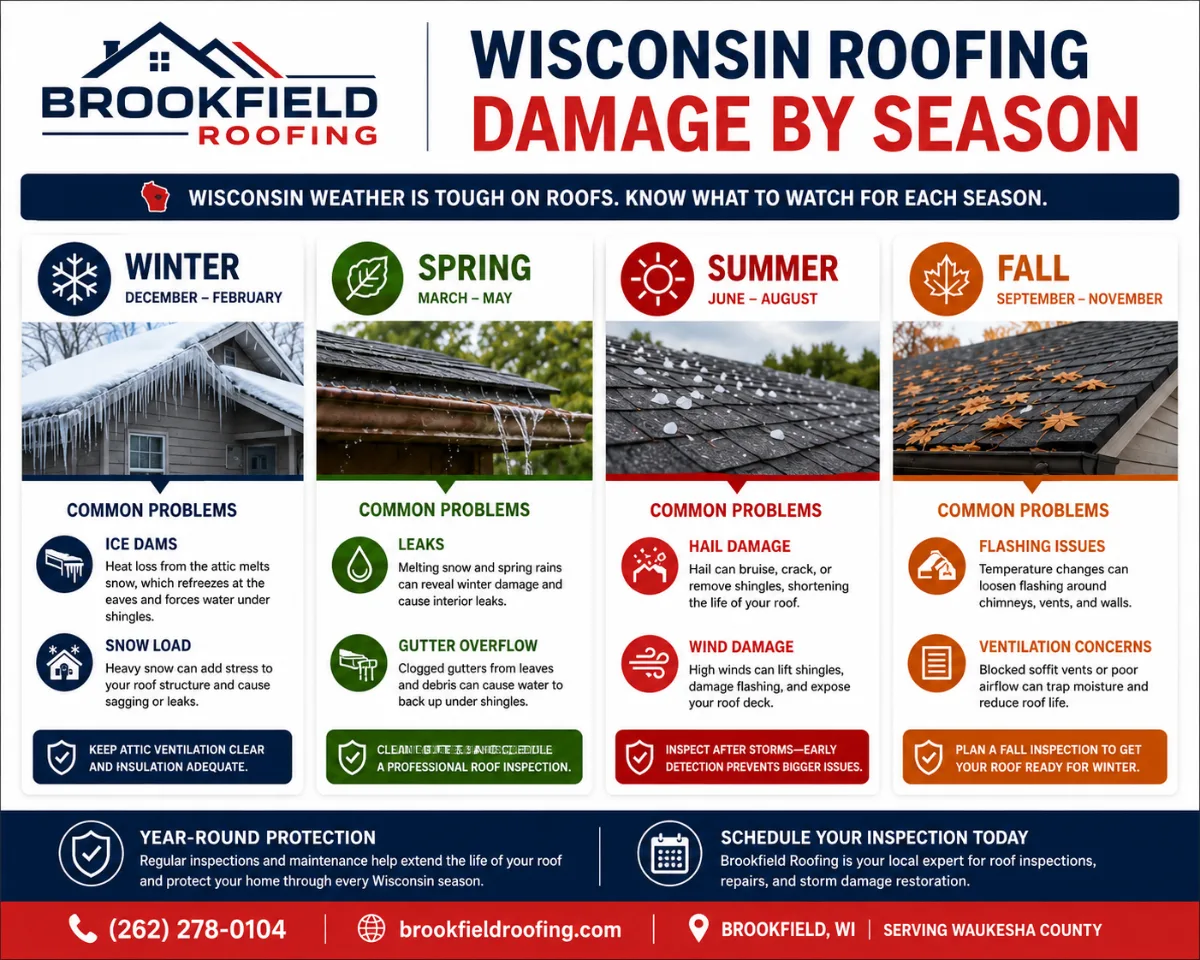
Ice dams are common in Wisconsin winters. They form when warm air in the attic melts snow on the roof, and that water refreezes near the colder eaves. As ice builds up, water can back up under shingles and enter the home.
Repairing ice dam damage may involve more than replacing shingles. A contractor may also recommend evaluating attic ventilation, insulation, and roof edge details so the same problem does not keep returning.
Repair Cost vs. Replacement Cost
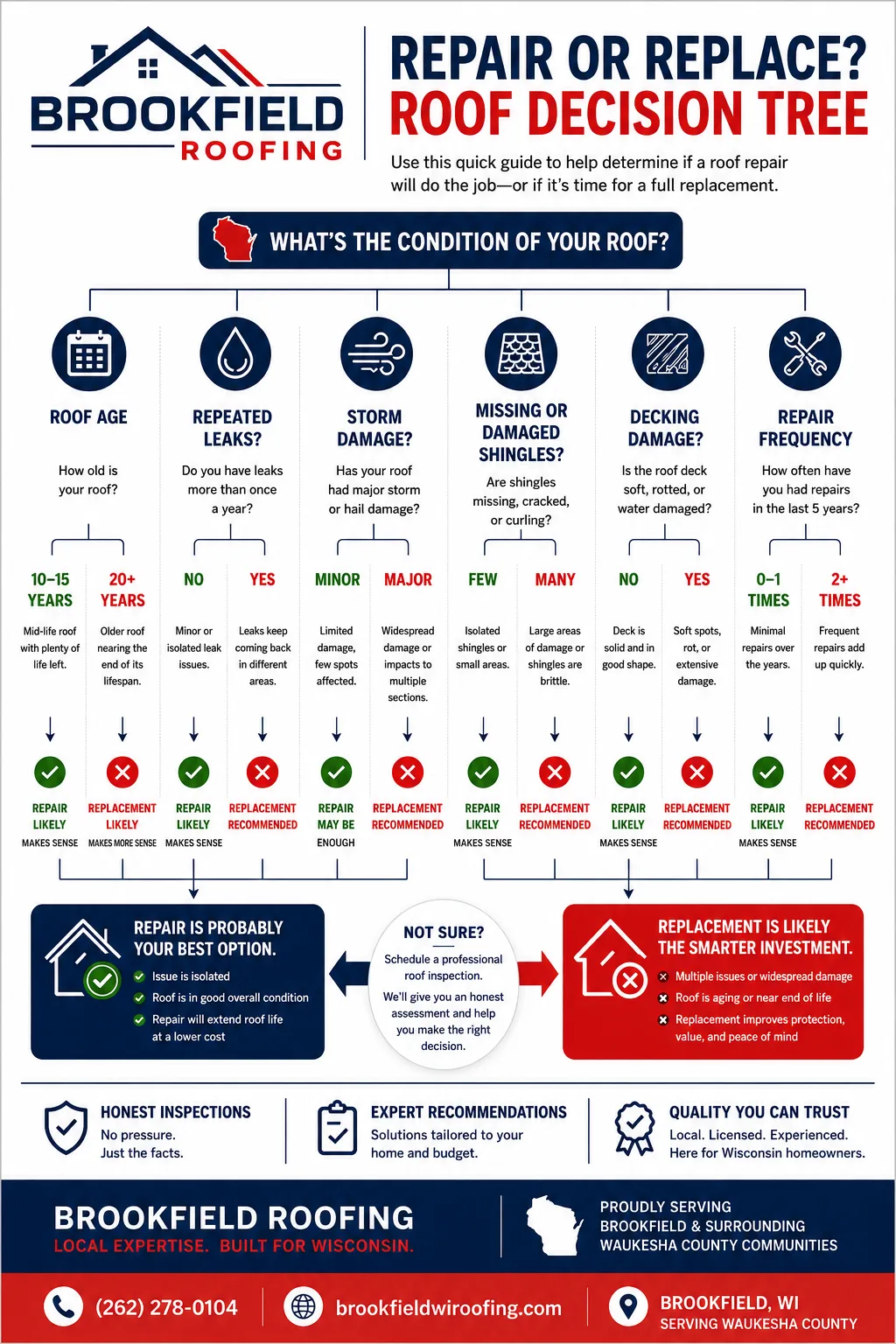
Not every damaged roof needs to be replaced. Many homes only need a targeted repair. But repair is not always the best long-term decision if the roof has widespread deterioration, repeated leaks, major storm damage, or materials that are near the end of their useful life.
A good roofing contractor should explain both options clearly. If the roof can be repaired responsibly, the homeowner should hear that. If the repair would only delay a larger problem for a short time, that should be explained too.
Homeowners comparing repeated repairs against a larger roof replacement project should consider the age of the roof, the number of existing problem areas, the cost of future repairs, and how long they plan to stay in the home.
A repair may make sense when damage is isolated and the surrounding roof is still in good condition. Replacement may make more sense when shingles are brittle, leaks are recurring, decking is compromised, or storm damage affects large sections of the roof.
What Should Be Included in a Roof Repair Estimate?
A written estimate protects the homeowner and helps make sure everyone understands the scope of work. It should be clear enough that the homeowner can compare contractors based on actual repair details, not just price.
A professional roof repair estimate should usually include:
- The area of the roof being repaired
- The suspected or confirmed cause of the problem
- The materials being used
- Whether shingles, flashing, underlayment, or decking are involved
- Cleanup expectations
- Estimated project timing
- Warranty or workmanship information
- Licensing and insurance confirmation
If the estimate is vague, ask for clarification before approving the work. A homeowner should not have to guess what is included.
Does Insurance Cover Roof Repairs?
Homeowners insurance may cover roof repairs when the damage is caused by a sudden covered event, such as hail or wind. Coverage depends on the policy, the cause of the damage, the age and condition of the roof, and the insurance company’s review.
Normal wear, old age, poor maintenance, or long-term deterioration are usually treated differently than sudden storm damage. A roofing contractor can inspect and document visible conditions, but homeowners should rely on their insurance carrier for coverage decisions.
The Insurance Information Institute provides general educational information about homeowners insurance and property claims.
Be cautious with any contractor who promises guaranteed claim approval. Honest documentation is helpful. Guaranteed insurance outcomes are not something a roofer should promise.
Why Local Roofing Experience Matters in Brookfield
Roofing in Wisconsin is different from roofing in milder climates. Roof systems here deal with snow, ice, wind, hail, heavy rain, humidity, and fast temperature swings. Those conditions affect shingles, flashing, ventilation, sealants, gutters, and attic moisture.
Local experience matters because a contractor working regularly in Brookfield, Elm Grove, New Berlin, Waukesha, and Pewaukee understands common roof styles, neighborhood construction patterns, weather exposure, and the kinds of repairs that tend to hold up in this area.
A local contractor also understands the importance of communication. Homeowners want a clear explanation, a written estimate, clean work, and a crew that respects the property from inspection through cleanup.
How to Avoid Overpaying for Roof Repairs
The goal is not always to choose the lowest estimate. The goal is to choose the clearest and most responsible estimate. A cheap repair that fails during the next storm is not a bargain.
Homeowners can protect themselves by asking direct questions:
- What caused the problem?
- Is this a temporary repair or a long-term repair?
- Are you replacing flashing or only sealing the area?
- Did you inspect the surrounding shingles?
- Is there any sign of decking or moisture damage?
- What happens if additional damage is found?
- Will I receive a written estimate?
A reliable contractor should answer these questions clearly without pressure. If the explanation feels rushed or confusing, it may be worth getting another opinion.
When Should You Schedule a Roof Repair Inspection?
Homeowners should schedule an inspection when they notice missing shingles, water stains, ceiling discoloration, granules in gutters, loose flashing, sagging areas, or signs of storm damage. It is also smart to schedule an inspection after severe hail or wind, even if the roof looks normal from the ground.
Waiting too long can allow water to move deeper into the roof system. What starts as a small repair can become a larger project if moisture reaches decking, insulation, drywall, or framing.
A careful inspection gives homeowners a clear picture of what is happening and what options make sense.
Final Thoughts
Roof repair costs depend on the condition of the roof, the source of the damage, the materials involved, and whether the problem is isolated or part of a larger roofing issue. A fair estimate should explain the repair clearly, document the problem, and help the homeowner make a confident decision.
For Brookfield homeowners, local weather makes timely repairs especially important. Hail, wind, snow, ice dams, and freeze-thaw cycles can turn small roofing issues into larger problems if they are ignored.
Brookfield WI Roofing Contractors provides roof inspections, written estimates, roof repair, storm damage evaluations, emergency repair guidance, and roofing solutions designed for Wisconsin homes.
If your roof is leaking, missing shingles, showing storm damage, or simply starting to look worn, schedule a roofing inspection and estimate before the problem becomes more expensive.
More Images