
Roofing Tips
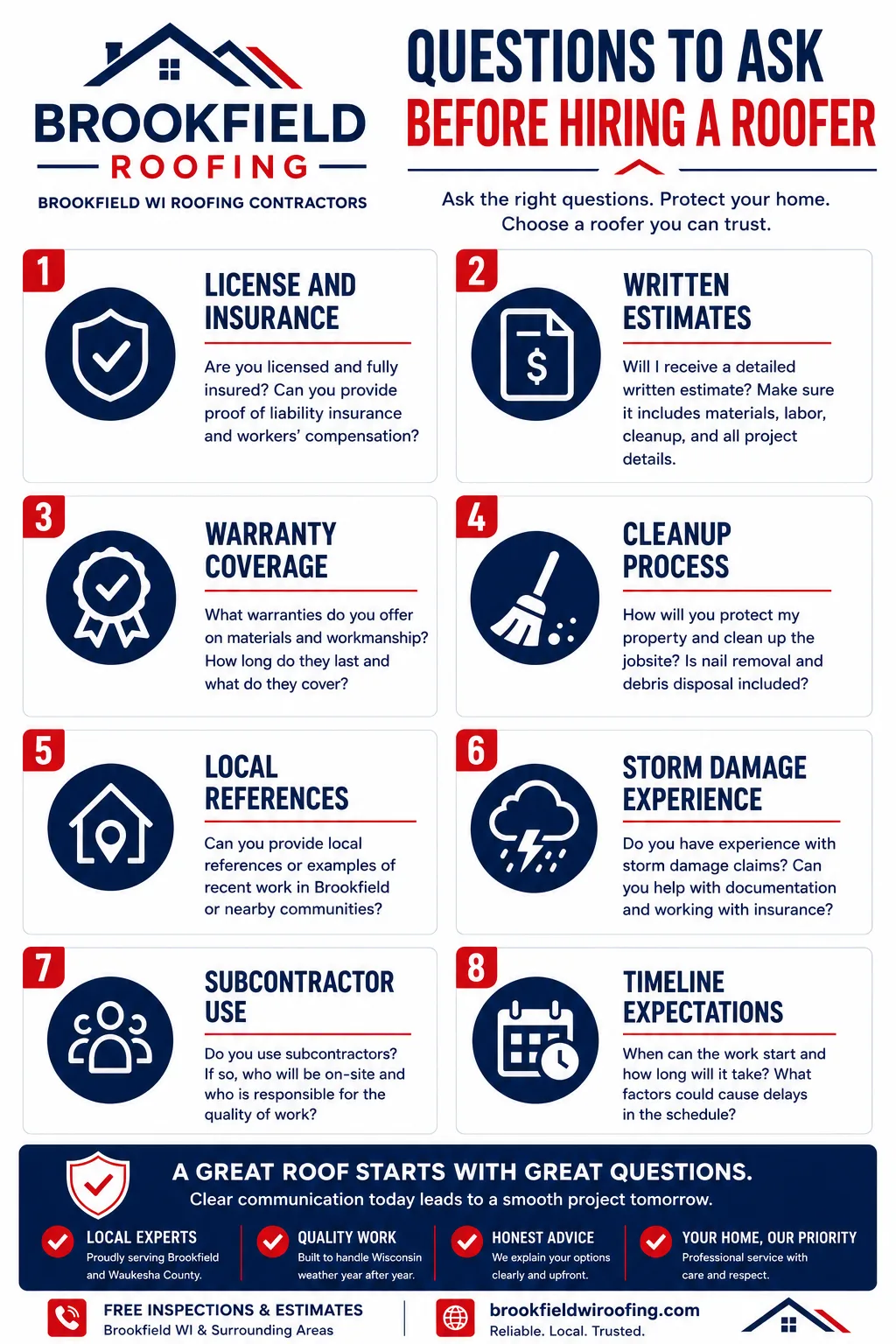
What Questions Should I Ask Before Hiring a Roofer?
Hiring a roofer is not just about getting a price. Your roof protects the structure of your home, your attic, your insulation, your drywall, and everything underneath it. In Brookfield, Wisconsin and nearby Waukesha County communities, roofs also deal with hail, high winds, heavy rain, snow, ice dams, and repeated freeze-thaw cycles that can expose weak roofing details quickly.
That is why the questions you ask before hiring a roofer matter. A professional contractor should be able to explain the condition of your roof, provide a written estimate, describe the materials being used, discuss warranty coverage, and walk you through the process without pressure.
The goal is not to hire the cheapest contractor. The goal is to hire a roofing company that communicates clearly, protects your property, understands Wisconsin weather, and completes the work correctly from inspection through final cleanup.
Why Asking the Right Questions Matters
Roofing projects involve more than shingles. Flashing, underlayment, ventilation, decking, valleys, gutters, pipe boots, chimney details, and cleanup all affect the final result. If one part of the system is overlooked, the roof may still leak even after new materials are installed.
In Brookfield, many homes built in the 1990s and 2000s now have roofing systems that are old enough to need closer attention. Some may only need a targeted roof repair. Others may be approaching the point where a full roof replacement is the more responsible long-term option.
Good questions help you separate a careful local contractor from someone who is only trying to close the job quickly. A trustworthy roofer should welcome your questions and answer them in plain language.
Are You Licensed and Insured?
This should be one of the first questions you ask. Roofing involves ladders, steep slopes, tear-off debris, tools, and heavy materials. Proper insurance helps protect both the homeowner and the crew if something unexpected happens during the project.
Ask for proof of liability insurance and workers compensation coverage. A professional roofing contractor should be comfortable providing documentation. Homeowners can also review contractor credential information through the Wisconsin Department of Safety and Professional Services.
If a roofer avoids this question, gives vague answers, or cannot provide documentation, that is a serious warning sign.
Will I Receive a Written Estimate?
A written estimate protects you from confusion. It should clearly explain what work is being done, what materials are included, and what areas of the roof are being addressed.
A professional roofing estimate should usually include:
- The roof area being repaired or replaced
- The roofing material being used
- Flashing details
- Underlayment and ice barrier details where needed
- Ventilation work if included
- Cleanup and disposal expectations
- Estimated project timeline
- Warranty information
- How hidden decking damage will be handled
Vague pricing may seem simple at first, but it often creates problems later. A clear written scope lets you compare roofing contractors based on the actual work being proposed, not just the bottom-line number.
What Did You Find During the Roof Inspection?
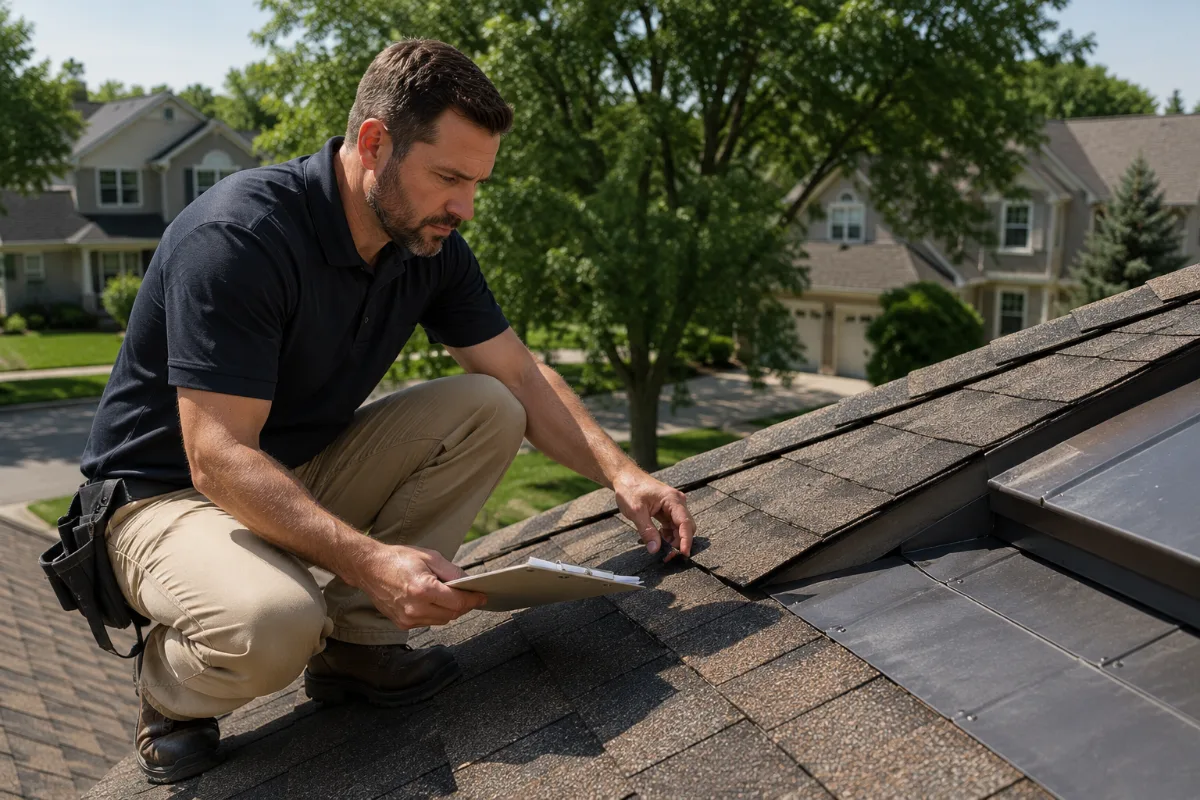
Before approving any roofing work, ask the contractor to explain what they found. A good roof inspection should look at more than the obvious problem area.
The roofer should be able to discuss the condition of shingles, flashing, valleys, vents, pipe boots, gutters, chimney areas, and any visible signs of moisture. If there are ceiling stains or attic concerns, the contractor should explain whether the suspected leak source matches what they found on the roof.
This is especially important in Wisconsin because water can travel under shingles, along rafters, or behind insulation before it becomes visible inside the home. The repair needs to address the cause, not just the stain.
Who Will Actually Perform the Work?
Some roofing companies use in-house crews. Others use subcontractors. Neither approach is automatically wrong, but you should understand who will be on your property and who is responsible for supervising the work.
Ask whether a foreman or project manager will be present. Ask who your main contact will be if questions come up during the project. You should also ask how quality control is handled before the job is considered complete.
Clear accountability matters. You do not want to find out halfway through the project that the person who sold the job is not involved in scheduling, production, cleanup, or follow-up.
How Will You Protect My Property?
Roofing work affects more than the roof itself. Tear-off debris, nails, ladders, trailers, and material staging can affect landscaping, siding, gutters, windows, driveways, decks, and outdoor furniture.
Ask how the contractor protects the property before, during, and after the job. A professional roofer should have a clear answer.
- Where will the dumpster or trailer be placed?
- How will landscaping be protected?
- Will siding, gutters, and windows be protected during tear-off?
- Will magnetic nail cleanup be completed?
- Will the crew clean up daily or only at the end?
- Who checks the property after completion?
Clean workmanship is part of professional roofing. A local contractor should treat your property with respect, not just install shingles and leave.
What Warranty Is Included?
Ask what warranty comes with the project and what it actually covers. Roofing warranties may include material coverage from the manufacturer, workmanship coverage from the contractor, or both.
It is important to understand the difference. A manufacturer warranty may relate to roofing materials, while workmanship coverage relates to installation. A good contractor should explain both without overselling what is covered.
You should also ask what can affect warranty coverage. Poor ventilation, storm damage, unrelated structural movement, or improper work by another contractor may create limitations. The roofer should explain this clearly before work begins.
Will You Inspect Flashing, Ventilation, and Decking?
Homeowners often focus on shingles, but many roof problems begin around flashing, ventilation, or decking. Chimneys, skylights, pipe boots, valleys, wall transitions, and attic airflow all affect roof performance.
Poor ventilation can contribute to trapped attic heat, moisture buildup, premature shingle aging, and ice dam formation. In Brookfield and Waukesha County, this matters because winter weather can turn small ventilation problems into larger roof and attic issues.
Ask whether the contractor will evaluate ridge ventilation, soffit intake ventilation, bathroom exhaust vents, chimney flashing, skylight flashing, pipe boots, and signs of soft decking or attic moisture.
A roof should be treated as a system. Replacing shingles without checking the supporting details can leave homeowners with future leaks or premature aging.
Do You Have Local Experience in Brookfield and Waukesha County?
Local experience matters. Roofing systems in Brookfield, Elm Grove, New Berlin, Waukesha, and Pewaukee face weather patterns that include hail, high winds, snow accumulation, ice dams, and freeze-thaw movement.
A contractor who works regularly in the area understands common local roof styles, neighborhood expectations, municipal considerations, and the types of problems that show up on homes built in this part of Wisconsin.
Local accountability also matters after the work is complete. If you have a warranty question, need follow-up service, or want a future inspection, it helps to work with a company that remains available in the community.
What Is Your Process for Storm Damage?
If your roof may have hail or wind damage, ask how the contractor documents storm-related conditions. A professional roofer should inspect carefully, take clear photos, explain what appears storm-related versus age-related, and avoid making promises about insurance approval.
Homeowners often schedule a storm damage roofing inspection after hail, high winds, or missing shingles to better understand the condition of the roof.
If water is actively entering the home after a storm, temporary protection or emergency roof repair may be needed before a permanent repair plan is finalized.
Be cautious with any contractor who guarantees claim approval, encourages exaggerated damage claims, or pressures you to sign before you understand the scope. A roofer can document roof conditions, but your insurance carrier makes coverage decisions.
What Happens If Hidden Damage Is Found?
Hidden damage is sometimes discovered after shingles are removed. Decking may be soft, rotted, delaminated, or damaged by long-term moisture. Flashing may be worse than expected. Ventilation issues may become clearer once the roof is opened.
Ask how the contractor handles unexpected findings. A professional roofer should document the issue, explain why it matters, provide approval steps, and avoid surprise charges without communication.
This question is especially important on older homes or roofs with a history of leaks.
How Long Will the Roofing Project Take?
Project timelines depend on roof size, weather, material availability, roof pitch, access, crew schedule, and whether decking repairs are needed.
Ask when the work can start, how long the project should take, what happens if weather delays the job, and who will update you during the process.
Clear expectations reduce stress and help homeowners plan around noise, driveway access, pets, children, and daily routines.
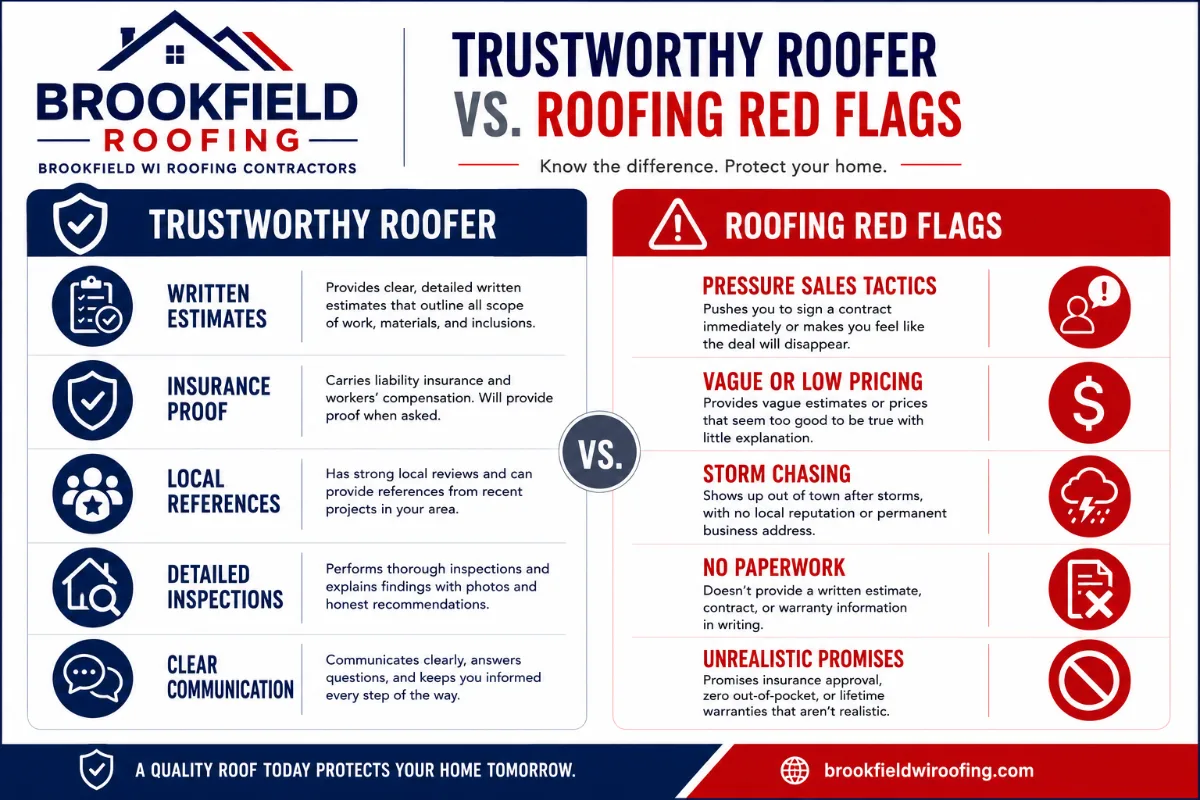
What Red Flags Should I Watch For?
Some roofing contractors operate professionally and transparently. Others rely on pressure tactics, vague estimates, or unrealistic promises.
Warning signs include:
- No written estimate
- No proof of insurance
- Pressure to sign immediately
- Large upfront cash demands
- Vague warranty explanation
- No local references
- Incomplete inspection
- Unclear project scope
- Guarantees about insurance approval
- Poor communication before the job starts
A trustworthy roofer should answer questions directly, explain the roof condition clearly, and give you space to make an informed decision.
Final Thoughts
Hiring a roofer should not feel like guesswork. The right questions help homeowners compare contractors fairly, understand the condition of the roof, and avoid expensive misunderstandings.
In Brookfield and throughout Waukesha County, roofing systems face serious seasonal weather exposure. That makes workmanship, flashing details, ventilation, cleanup, documentation, and communication especially important.
Brookfield WI Roofing Contractors provides roof inspections, written estimates, roof repair, storm damage evaluations, emergency repair guidance, and roof replacement services for homeowners who want clear answers without pressure.
If your roof is aging, leaking, storm-damaged, or simply raising questions, schedule a roofing inspection and estimate to better understand your options before the problem becomes more expensive.
More Images